RECP Wildlife Friendly Article
Introduction
Wildlife and environmentally friendly rolled erosion control products (RECPs) have and continue to be a focus of the Erosion Control Technology Council (ECTC). ECTC is a leading industry organization home to top manufacturers of erosion and sediment control products, component suppliers, material distributors, and test laboratories. ECTC members are dedicated to advancing the knowledge, experience, and expertise of erosion and sediment control. The non-profit organization’s mission is to develop performance standards, uniform testing procedures, and guidance on the application and installation of hydraulic erosion control products (HECPs), RECPs, and sediment retention fiber rolls (SRFRs). ECTC recently expanded their reach to other technologies as well and they promote the use of erosion and sediment control products through industry leadership and education in the hope of making a substantial contribution to the science of erosion control and environmental preservation.
Background
RECPs are used to reduce the effects of soil erosion and accelerate re-vegetation during and after construction projects. The benefits of these products in limiting soil loss and reducing sediment load to waterways are well documented and undeniable. There are two types of material that make up the netting often used in erosion control products; biaxially oriented processed nettings extruded from synthetic polymers such as polypropylene are the most common. However, nettings woven from natural fibers such as jute and coconut fiber are also widely used. Both types of netting have features that make them best suited for given erosion control applications.
Extruded plastic nettings are economical, provide consistent tensile strength, may be altered to satisfy longevity requirements, and offer the only non-degradable alternative for use in turf reinforcement mats (TRMs) that are designed to be around for decades. However, as an extruded material, the machine and cross-directional filaments of these nettings are fixed at their junctures to form the mesh openings. These fixed mesh openings may pose a potential concern to wildlife, at least on a temporary basis. Large, rough-bodied snakes may be susceptible to potential entrapment. However, after sufficient netting degradation or once vegetation establishes through the RECP and the netting is drawn tight to the soil surface, potential for wildlife entrapment is alleviated.
What are the solutions to help balance wildlife and environmental concerns and still provide high levels of erosion control performance capabilities provided by RECPs?
Plastic netting is a critical component in many RECPs, providing consistent strength and quality in both the manufacturing and installation processes. Reducing animal entrapment does not necessarily require eliminating plastic netting. Proper installation of RECPs with plastic netting can greatly reduce the risk of wildlife entanglement. There is less chance that snakes and other forms of wildlife will try to move "through" the RECP netting structure when RECPs, including terminal edges, are anchored properly to the subgrade.
Special Plastic Nettings
There are a variety of plastic netting designs available with aperture sizes and tensile strengths specifically designed to reduce animal entrapment. In fact, these innovative netting designs have been tested at a leading research university and have been proven to allow snakes to pass freely through the netting, greatly reducing entanglement and entrapment. These innovative plastic netting designs are available in RECPs with a range of fibrous fill types, functional life spans, degradation mechanisms, and erosion control performance capabilities.
Woven Natural Fiber Nettings
Furthermore, woven natural fiber nettings are a common wildlife-friendly solution for use in RECPs. Since these nettings are typically manufactured from yarns that are loosely woven together, and not fixed or knotted at their intersections, the mesh openings can expand, if needed. This allows wildlife to move more freely through the collective yarns, greatly reducing the risk of animal entrapment. The 100% biodegradability of these types of nettings is also considered beneficial to wildlife and the environment. However, 100% biodegradable netting has a faster degradation rate, and thus, shorter service life when compared to fixed weld polymer-based netting. As such, polymer-based nettings will persist in the environment longer to help hold fiber fill in place, act as a mechanical member for ground anchoring, and reinforce root structures.
Netless Erosion Control Blankets
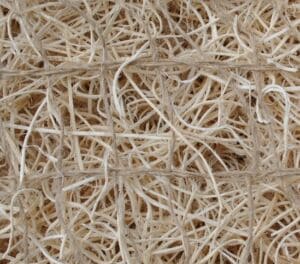
RECPs have also been innovated that do not use any netting structures. These products provide lower tensile strengths than their netted counterparts. Thus, netless blankets generally are designed for low to moderate slopes and light swale protection projects and can eliminate any potential concerns regarding wildlife entrapment.
How do I choose the right RECP option?
Engineers, specifiers and installers should evaluate each application (erosion and hydraulic parameters, types of wildlife present, longevity requirements, etc.) before deciding on the most appropriate RECP type for their project. RECPs provide a cost-effective way to control soil movement and accelerate vegetation growth from flat areas to concentrated flow applications, which certainly benefits wildlife by protecting water resources and creating pollinator corridors and wildlife habitat, amongst several other benefits. Through proper selection and installation of RECPs, these benefits can be maximized while minimizing any potential concerns initially posed to wildlife where and when they might exist.
About
ECTC members are committed to providing Wildlife and Environmentally Friendly RECPs and other technologies. Please contact ECTC to learn more about ECTC’s members, tools, services, and sustainable solutions for controlling soil erosion. In addition, there is a complete toolbox of specifications, CAD files, installation videos, fact sheets, etc. online at www.ErosionCouncil.org website.